
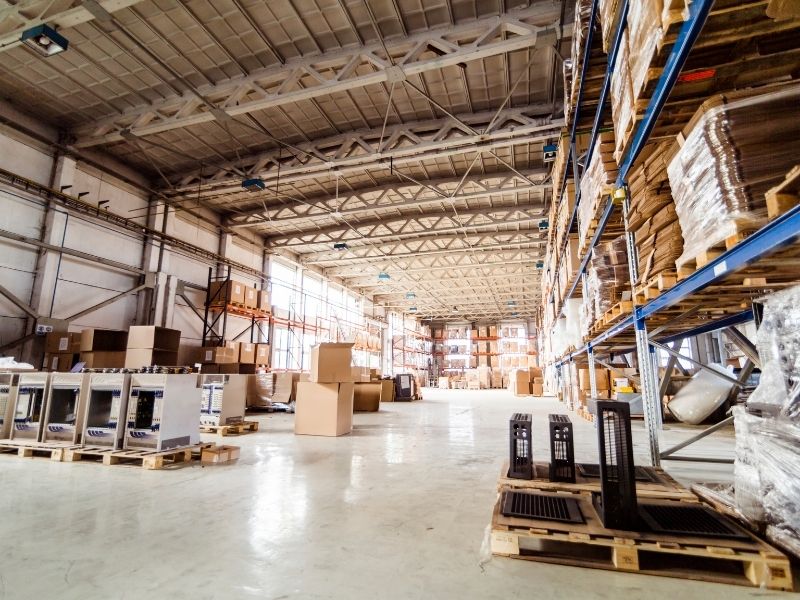
The Miami industrial real estate market has entered a transformative period as of the second quarter of 2026. After years of record-breaking absorption and skyrocketing rents, the sector is shifting toward a “two-tier” landscape where asset quality and financial strategy dictate success.
For business owners, logistics managers, and investors looking to anchor their operations in South Florida, the choice between buying and leasing is no longer just a calculation of monthly payments; it is a high-stakes decision regarding capital liquidity, long-term operational resilience, and navigating the complexities of Miami-Dade County’s specific zoning and infrastructure.
The 2026 Miami industrial market context
Miami’s industrial fundamentals have stabilized following the post-pandemic surge that saw some of the most aggressive rental growth in the United States. Vacancy rates across Miami-Dade reached 7.1% in Q1 2026, marking the highest levels in five years. While this suggests a cooling market on the surface, it is more accurately described as a “stabilization at the top,” where new supply is finally beginning to meet the sustained demand for high-quality, Class A warehouse space.
Average asking rents for Miami industrial real estate remain near all-time highs, promediating $20.84 per square foot (PSF) NNN. Simultaneously, asset pricing for those looking to purchase has strengthened to a new peak of approximately $210 per square foot. This environment has triggered a “flight to quality,” where tenants and buyers are aggressively favoring modern, institutionally developed facilities over older, second-generation buildings that may lack the clear heights or power requirements needed for 2026 automation standards.
Option 1: Leasing – flexibility and capital preservation
Currently, leasing is a preference among many fast-growth companies because they need to maintain the ability to keep their cash liquid to be able to support inventory, staffing, and technology upgrades. With industrial rents plateauing in Miami, leasing enables these companies the ability to modify their operational footprint about every 3 to 5 years due to changing supply chain requirements. Given the rate at which last-mile delivery consumer expectations and availability of labor are changing in the Miami market, having this flexibility is a large advantage over their competition.
Operational agility in South Florida
Leasing also shifts the burden of major maintenance, structural repairs, and complex regulatory compliance to the landlord. With vacancies in submarkets like Medley and Hialeah nearing 9.3% and 5.0%, the “negotiation battlefield” has returned to Miami. For the first time in several years, tenants have the leverage to negotiate for modernized Class A spaces with significant Tenant Improvement (TI) allowances. This is particularly relevant for businesses moving into Doral or near Miami International Airport, where specialized build-outs for cold storage or pharmaceutical logistics are in high demand.
Financial considerations for tenants
However, occupiers must remain vigilant regarding NNN (Triple Net) operating costs. In Miami, these additional expenses—including skyrocketing insurance premiums, property taxes, and common area maintenance—typically add $2.00 to $3.00 PSF to the base rent. When evaluating a 50,000-square-foot facility, the “all-in” annual cost can quickly exceed $1 million, making it essential to audit the building’s energy efficiency and tax assessments before signing.
Partner with Agora Real Estate Group and let’s create a plan that meets your needs.
Option 2: Buying – long-term wealth and asset control
For established businesses with stable demand and surplus capital, buying a warehouse in Miami is a powerful wealth-building tool. Miami remains one of the fastest-growing industrial markets in the country, and with sales prices hitting $210 PSF, owners are seeing substantial equity growth even during periods of broader economic stabilization.
Fixed costs and tax advantages
Ownership protects a business from the 3% to 5% annual rent growth typically projected for the Miami market. Furthermore, owner-occupiers can leverage tax advantages such as depreciation and interest deductions that are unavailable to tenants. In the 2026 fiscal landscape, these deductions can provide a critical buffer against rising operational costs.
Control over infrastructure
Buying also provides total control over specialized facility requirements. As we move toward more automated logistics, the ability to upgrade a building’s heavy power infrastructure or install localized solar grids is a significant asset. Owners don’t have to wait for landlord approval to integrate Robotics-as-a-Service (RaaS) or expand their dock-high loading capabilities. However, ownership is capital-intensive; down payments of 20% to 30% and closing costs can consume working capital that might otherwise be needed for immediate operational expansion.
You might be interested in: What to look for when leasing a warehouse in Doral, Florida
Key submarket analysis: Doral, Medley, and Hialeah
When deciding whether to buy or lease, the specific Miami submarket plays a vital role in the decision-making process.
- Doral: As the Crown Jewel of Miami industrial real estate, Doral remains the most expensive and land-constrained area. Because developable land is virtually non-existent, ownership is rare and commands a significant premium. Most businesses in Doral choose to lease to stay close to the airport’s cargo gates.
- Medley and Hialeah Gardens: These areas offer slightly more opportunities for purchase, especially for mid-sized “small-bay” warehouses. These submarkets are ideal for owner-occupiers who serve the local Miami construction and trade industries.
- Opa-locka and Gratigny: These northern corridors are seeing the most “Class A” new construction in 2026. For companies looking for large-scale facilities with the latest ESFR fire suppression and 36-foot clear heights, leasing in these newer developments is often more cost-effective than trying to build or buy outdated inventory that requires massive retrofitting.
Choosing the right strategy for 2026
The ideal choice between buying and leasing in Miami depends heavily on your company’s specific life cycle and capital strategy.
Choose LEASING if: You are a growing distribution or e-commerce firm in a rapid expansion phase. The current vacancy rate provides the best opportunity in years to secure a premium Class A facility with favorable concessions. Leasing keeps your capital “liquid,” allowing you to invest in the technology and inventory needed to dominate the South Florida market.
Choose BUYING if: You are a mature, cash-rich business with predictable long-term demand and a need for a fixed location. Ownership in Miami acts as a safe haven for capital, shielding your business against future rent spikes and property scarcity in a region where the Atlantic Ocean and the Everglades strictly limit new supply.
As the Miami real estate landscape continues to evolve through 2026, staying informed on localized trends and “Class A” availability is essential for making a decision that supports your bottom line. Whether you choose the flexibility of a lease or the security of a deed, the Miami industrial market remains the most resilient logistics hub in the southeastern United States.
Contact Agora Real Estate Group for a data-driven real estate approach that will help you find the ideal spot for your operations.