
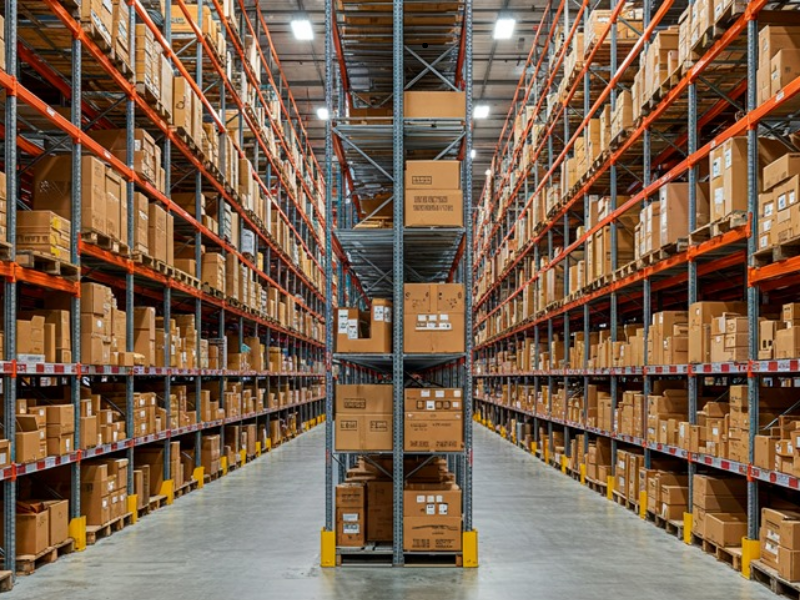
In 2026, the baseline commercial valuation for a Miami warehouse averages $257 per square foot across Miami-Dade County, supported by an average countywide industrial asking rent of $17 per square foot NNN and a healthy overall vacancy rate of 8.0%. However, the exact market value of a specific property depends heavily on its Net Operating Income (NOI), clear ceiling height, loading dock configuration, office ratio, and physical condition.
Whether you plan to buy additional commercial assets, lease your space to industrial tenants, or rent individual units, understanding how commercial properties are valued in Miami-Dade allows you to maximize your equity and make informed real estate decisions.
What key market metrics impact your Miami warehouse value in 2026?
Determining the value of industrial property across Miami-Dade County requires looking at broader macroeconomic fundamentals and regional commercial benchmarks. According to market data compiled by Agora Real Estate Group in their Q2 market analysis, South Florida’s industrial sector continues to showcase strong underlying demand driven by international trade, logistics, construction, and e-commerce.
The core performance indicators across Miami-Dade County include:
- Average sales benchmark: $257 per square foot
- Average industrial asking rent: $17 per square foot NNN
- Overall county vacancy rate: 8.0%
Because countywide industrial asking rents hold at an average of $17 per square foot NNN, industrial property owners benefit from strong baseline cash flows. Under a Triple Net (NNN) lease structure, tenants cover operating expenses —including property taxes, insurance, and common area maintenance (CAM)— allowing landlords to preserve their Net Operating Income (NOI), which directly strengthens the underlying property valuation.
To explore commercial listings and market valuation resources across South Florida, visit Agora Real Estate Group.
How do brokers calculate the value of a Miami warehouse?
Commercial real estate professionals use three primary valuation methodologies to evaluate an industrial facility in Miami-Dade County:
1. The income capitalization approach
For leased investment properties, value is primarily determined by financial yield. Brokers and appraisers calculate the property’s Net Operating Income (NOI) and divide it by the prevailing market capitalization rate (Cap Rate). For example, a property generating strong, steady NNN rental cash flow will command a premium price from institutional and private investors seeking reliable returns.
2. The sales comparison approach
For owner-user facilities where the buyer intends to occupy the space, valuation relies heavily on recent sales of comparable properties across Miami-Dade. Transactions are evaluated on a price-per-square-foot ($/SF) basis, taking into account property age, usable square footage, and functional utility.
3. The cost approach
This method estimates what it would cost to purchase land in Miami-Dade and construct an equivalent industrial building from the ground up, minus physical depreciation. Given high land acquisition costs and rising construction expenses across South Florida, replacement cost serves as a strong floor for existing building valuations.
You might be interested in: Miami industrial asking rents: 2026 Market Guide
What physical features add the most value to your Miami warehouse?
While countywide averages establish a baseline benchmark of $257 per square foot, specific physical and operational specifications can push a building’s valuation significantly above standard market metrics:
- Clear ceiling height: Facilities featuring 20-foot to 32-foot clear heights allow vertical racking and inventory stacking, offering significantly more volume per square foot than older, low-clearance buildings.
- Loading infrastructure: Properties equipped with dock-high loading platforms, heavy-duty ramp access, and street-level drive-in doors accommodate a wider array of logistics and distribution fleets, commanding higher lease rates and sales prices.
- Office-to-warehouse ratio: Buildings with 10% to 20% air-conditioned office space, customer reception areas, or modern showrooms appeal directly to flex space operators and trade contractors willing to pay a premium.
- Heavy power & parking ratios: Facilities with three-phase power, heavy electrical capacity, and generous truck staging or employee parking space attract high-value manufacturing and distribution users.
Gain additional market insights through the Agora Real Estate Group submarket reports.
Should you sell, lease, or rent your Miami warehouse property today?
Deciding whether to sell your property outright, lease it to a single tenant, or rent out flex space depends on your financial goals and long-term capital strategy.
- Selling your industrial property: Cashing out at current market valuations allows property owners to unlock built-up equity, reallocate capital into higher-yielding assets, or execute a 1031 tax-deferred exchange into passive real estate.
- Leasing flex or distribution space: Signing long-term industrial leases at or above the county average of $17 per square foot NNN generates predictable, recurring income while protecting your capital against inflation through annual rent escalations.
- Executing a sale-leaseback: Business owners who operate out of their own facility can sell the real estate to an investor while simultaneously signing a lease to remain in place as a tenant. This unlocks trapped equity to fund business expansion while maintaining operational continuity.
Frequently asked questions
What is the average price per square foot for a Miami warehouse in 2026?
The countywide commercial valuation benchmark for an industrial property in Miami-Dade averages $257 per square foot, with actual pricing varying based on building condition, clearance, and location.
What is the average industrial asking rent in Miami-Dade County?
The average countywide industrial asking rent in Miami-Dade stands at $17 per square foot NNN, providing a strong rental income base for commercial landlords.
How does Net Operating Income (NOI) affect my warehouse value?
Under the Income Capitalization Approach, a higher NOI directly increases property value. By adjusting below-market leases up to current market rates ($17 NNN) and maintaining a triple net structure, property owners can maximize their overall asset value.
What is the difference between a Broker Opinion of Value (BOV) and a formal appraisal?
A formal commercial appraisal is a detailed historical valuation usually required by banks for lending purposes. A Broker Opinion of Value (BOV) is a forward-looking market analysis provided by commercial real estate brokers to help owners understand what real buyers are currently willing to pay in the active Miami market.
Discover the exact value of your Miami warehouse
Navigating South Florida’s dynamic commercial market requires up-to-date transaction data and local brokerage expertise. Whether you are considering selling an industrial property, leasing vacant warehouse space, or analyzing the current market value of your real estate portfolio, Agora Real Estate Group delivers the strategic guidance you need.
Contact the commercial experts at Agora Real Estate Group today to schedule a property valuation.