Central Miami

Central Miami Overview

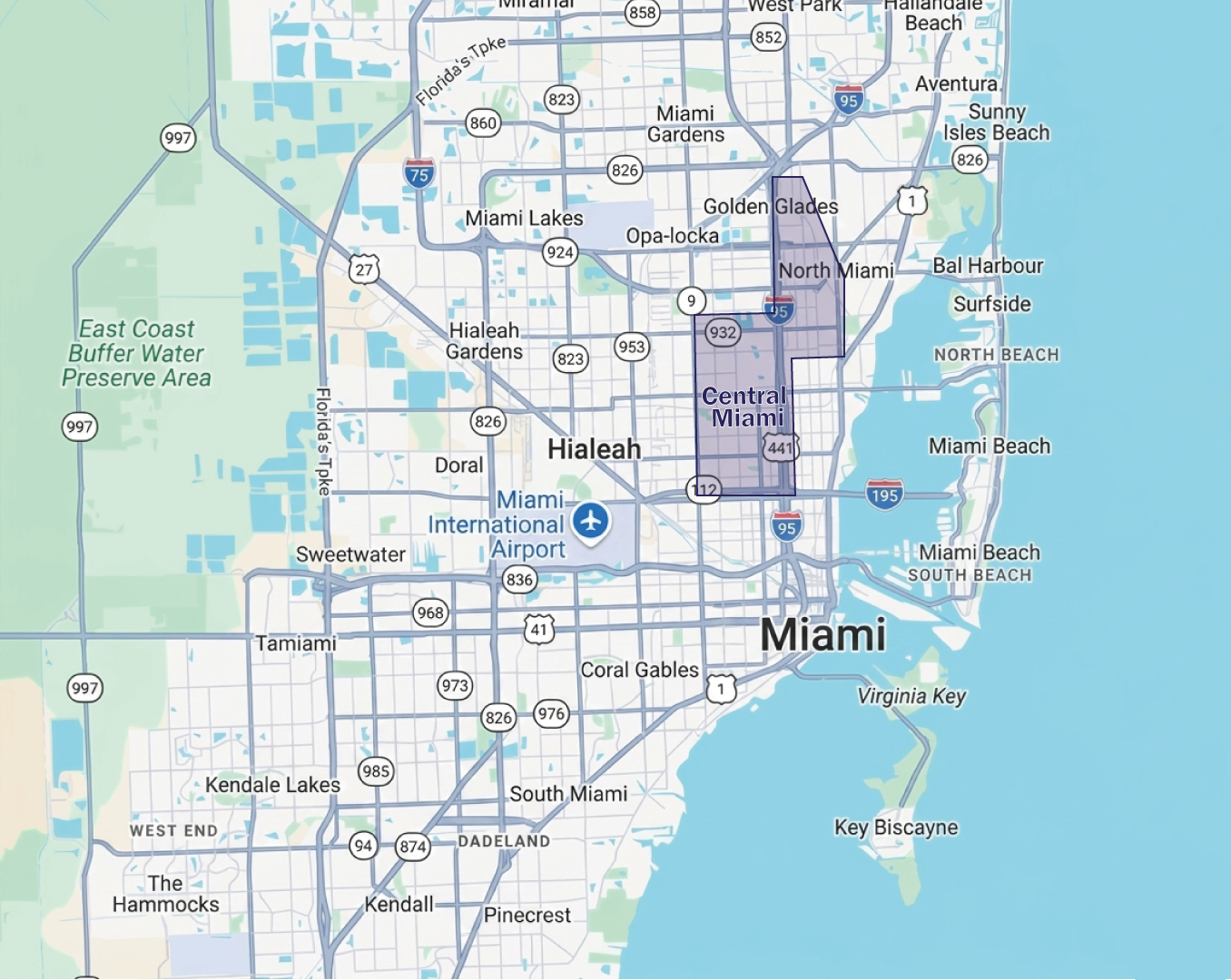
The Central Miami industrial submarket is one of South Florida’s most established and strategically located industrial hubs. Its proximity to Miami International Airport, major highways, and densely populated neighborhoods makes it highly attractive for logistics, distribution, manufacturing, and service-oriented businesses. Strong tenant demand, combined with limited land for new development, continues to support low vacancy rates and healthy rental growth throughout the market.

Market indicators

Miami industrial market vacancy rate indicator

Vacancy Rate

2.9% ▼

Icon representing an individual industrial submarket area in Miami commercial real estate

12 Mo Net Absorption SF

25.4K ▲

Industrial properties under construction square footage icon

Under Construction SF

6K ▲

Industrial market rent NNN per square foot indicator

Market Rent PSF

$20.55 ▲

Industrial property sale price per square foot icon

Market Sale Price / PSF

$267 ▲

Total industrial inventory square footage across Miami submarkets

Total Inventory SF

3.4M

Notable Lease Transactions
Notable Lease Transactions Size SF Tenant Deal Type
Notable Sales Transactions
Notable Sales Transactions Size SF Buyer Sale Price
8700 NW 7th Ave 28,782 Team IShowSpeed 10.81Mil (375.65 PSF)
2508 NW 37th St 17,000 USA Scrap & Metal Recycling 6.1Mil (359 PSF)
4760 NW 17th Ave 7,900 Prime Eleven LLC 1.62Mil (205.06 PSF)

Featured Industrial Parks in Central Miami

Explore the top industrial parks in this submarket. Click “Read more” to view detailed information about each park.

LINK Sunshine State

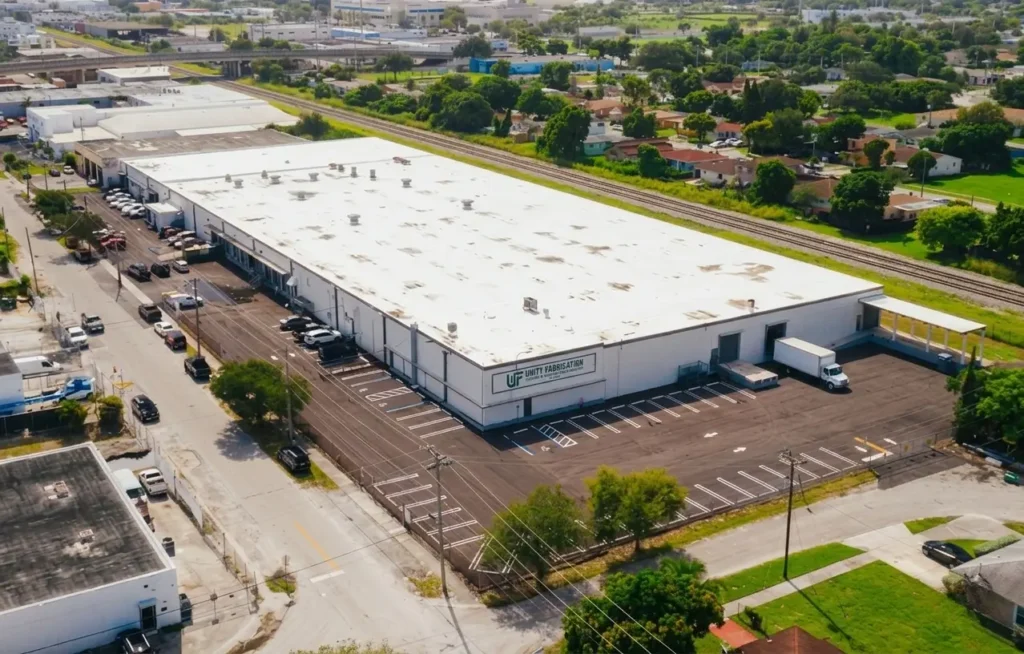
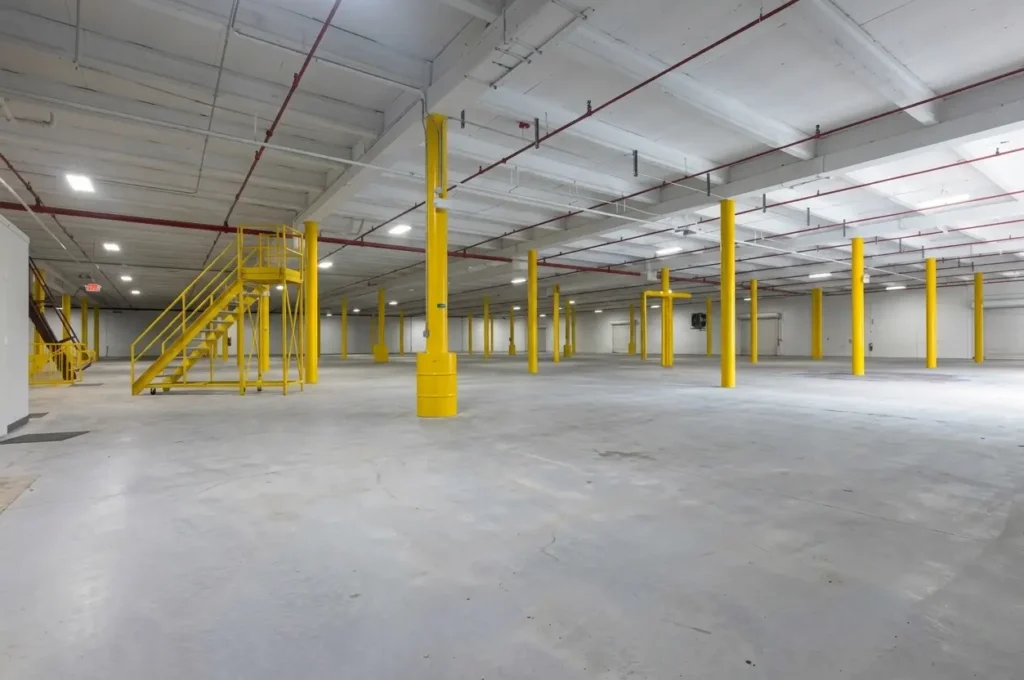
LINK Sunshine State is an industrial property located at 1300–1350 NW 74th Street in Central Miami. The building offers approximately 100,453 square feet of available space, including ±5,500 square feet of office area, and is suited for a range of distribution, storage, and light industrial uses. The property features an existing building structure with institutional ownership and management.

Park & building highlights

LINK Sunshine State offers functional industrial specifications within an infill Miami location.

Key Building Features

  • Total available space: ±100,453 SF 
  • ±5,500 SF of office space 
  • 16 dock-height loading positions 
  • 2 concrete ramps 
  • 2 additional external loading docks 
  • 16’8” clear ceiling height 
  • Concrete tilt-up construction 
  • Fully fenced parking and loading area 
  • Outdoor storage capability 
  • Institutionally owned and managed 

Why LINK Sunshine State is Relevant

Central Miami remains a supply-constrained industrial submarket with strong demand driven by proximity to the urban core. LINK Sunshine State provides existing industrial space with functional loading, secured yard area, and immediate highway access, making it a relevant option for users seeking centrally located facilities within Miami-Dade County.

Location & access

The property is situated along the Interstate 95 corridor, just off the NW 79th Street exit, providing direct connectivity to Miami’s urban core and surrounding submarkets.

Its central location allows for efficient access to Miami International Airport, PortMiami, and other regional transportation routes, supporting local and regional distribution operations.

72nd Street Logistics Center

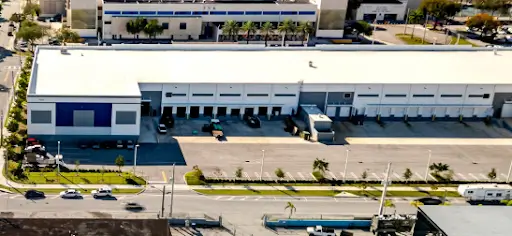
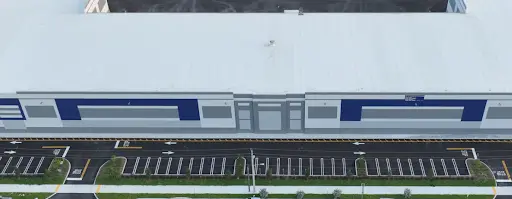
72nd Street Logistics Center is a modern Class A industrial property located at 1010 NW 72nd Street in Central Miami industrial submarket. The approximately 4.7-acre industrial site features a ±85,376-square-foot warehouse designed to accommodate distribution, logistics, warehousing, and other industrial users. With modern construction, efficient loading capabilities, and proximity to major transportation corridors, the property provides a strategic option for businesses seeking industrial and warehouse space in Central Miami.

Park & building highlights

72nd Street Logistics Center brings modern Class A industrial inventory to an established Central Miami location, combining efficient warehouse functionality with convenient access to major transportation infrastructure.

Key Building Features

  • ±85,376 SF Class A industrial building
  • ±4.7-acre industrial site
  • 30′ clear height
  • 20 dock-high loading doors
  • 2 drive-in doors
  • 73 parking spaces
  • Modern warehouse and distribution configuration
  • New construction completed in 2023–2024
  • 24-hour access
  • Immediate proximity to I-95
  • Approximately 4 miles from Miami International Airport
  • Approximately 5 miles from PortMiami
  • Well positioned for logistics, distribution, warehousing, and industrial users

Why 72nd Street Logistics Center is Relevant

Central Miami remains an important industrial location due to its proximity to Miami International Airport, PortMiami, I-95, Downtown Miami, and the region’s established population and employment centers. As demand continues for strategically located warehouse and distribution facilities, modern infill industrial properties such as 72nd Street Logistics Center offer businesses an opportunity to locate closer to their customers and workforce.

With Class A construction, substantial loading capacity, and direct access to I-95, 72nd Street Logistics Center is well suited for companies seeking warehouse space, distribution facilities, logistics space, or industrial property in Central Miami.

Location & access

72nd Street Logistics Center offers a highly strategic infill Miami location with immediate access to I-95, providing efficient connectivity throughout Miami-Dade County and South Florida. The property is approximately 4 miles from Miami International Airport and 5 miles from PortMiami, while also providing convenient access to Downtown Miami, Midtown, Wynwood, and surrounding employment and population centers.

This central location makes the property particularly well positioned for last-mile distribution, regional logistics, warehousing, and businesses serving Miami’s dense urban market.

Park & building highlights

Location & access

Park & building highlights

Location & access

Park & building highlights

Location & access

Type of Uses

  • Urban Last-Mile Fulfillment: High-velocity logistics facilities designed to route consumer goods directly into Miami’s core population.
  • Import/Export & Wholesaling: Textile hubs, household goods distributors, and international trade suppliers leveraging proximity to major highway interchanges.
  • Construction Material Distribution: Staging grounds for roofing, plumbing, electrical, and structural suppliers servicing active downtown developments.
  • Commercial Printing & Light Assembly: Local commercial printing houses, signage fabrication, and lightweight consumer product assembly.

Zoning

  • IU-1 (Light Industrial District): The baseline designation covering the majority of the submarket’s warehouse footprint, permitting wholesale storage, distribution, and low-impact light manufacturing.
  • IU-2 (Industrial District): Found in pockets closer to the rail lines, accommodating heavier processing, packaging, and commercial assembly operations.
  • IU-C (Controlled Industrial District): Applies to newer business parks in the area, enforcing higher aesthetic standards, structural setbacks, and hidden loading requirements.

Typical Property Types

  • Street-Level & Rear-Load Infill Warehouses: Predominantly legacy masonry buildings with functional front-office configurations and rear street-level or dock-high loading doors.
  • Large-Scale Institutional Logistics Parks: Modern, high-cube logistics developments (such as the Prologis Gratigny Industrial Park) featuring advanced clear heights and massive truck courts.
  • Small-to-Mid-Bay Flex Spaces: Multi-tenant industrial spaces ranging from 2,000 to 15,000 SF, heavily utilized by local service businesses and regional distributors

Major Transportation Routes

  • Gratigny Expressway (SR 924): Forms the vital east-west logistical backbone of the submarket, connecting trucks directly to major north-south highways.
  • Interstate 95 (I-95): Borders the eastern edge of the submarket, providing an immediate freight corridor north to Broward County and south to the downtown core.
  • Palmetto Expressway (SR 826): Accessible on the western fringe, facilitating fluid shipping loops across the western side of the county.
  • NW 27th Avenue & NW 79th Street: Major arterial surface streets serving as dense commercial and local trucking corridors.

Airport/Port Access

  • Miami International Airport (MIA): Positioned roughly 15–20 minutes southwest, offering rapid access for air-freight forwarders and customs logistics providers.
  • PortMiami: Located approximately 20 minutes southeast via I-95 and the Port Tunnel, providing seamless container port drayage routes.
  • Rail-Served Infrastructure: Portions of the Central/North Central submarket feature active rail spurs tied into South Florida’s major cargo rail networks, facilitating heavy bulk transport. 

Industrial Characteristics

  • Irreplaceable Infill Location: Central Miami is a mature, land-constrained industrial corridor. With virtually no raw greenfield land available, current development is driven strictly by the strategic demolition and redevelopment of older structures.
  • Top-Tier Corporate Commitments: Despite broader countywide vacancies settling near 7.7% – 7.8% in late 2026, Central Miami continues to capture high-volume requirements—highlighted by institutional giants like Amazon securing massive facilities (such as their 235,850 SF lease at Prologis Gratigny) to fortify their large-item urban delivery grids.
  • Balanced Rental Structures: Offers a highly competitive alternative to the steeper premiums of Doral/Airport West. Average asking lease rates hover around $20 per square foot, delivering class-A amenities at a relative discount. 

Why Companies Choose the Submarket

  • Unrivaled Urban Proximity: The premier choice for logistics companies that require immediate, low-transit-time access to Miami’s densest urban residential zones (including Downtown, Brickell, and Midtown).
  • High-Velocity “Last-Mile” Efficiency: Excellent highway integration via the Gratigny and I-95 allows e-commerce and retail distributors to hit delivery windows that are difficult to manage from far-flung western submarkets.
  • Deep Workforce Access: Surrounded by a robust, culturally diverse residential population, ensuring tenants have access to a large, dependable pool of local logistics, warehouse, and management labor.