
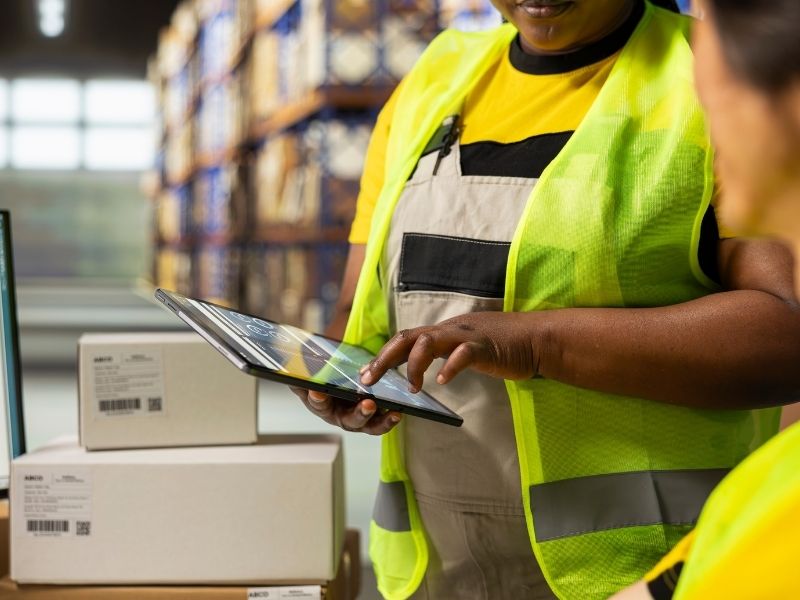
As the logistics environment becomes more and more intricate by 2026, the playbook for industrial development has drastically changed. While speculative development will continue to be used as a basis in this market, the Build to Suit (BTS) option has emerged as the favored choice. Companies and businesses will be searching for the specific efficiency that can only be found in a custom-made facility.
From E-commerce demand to pandemic acceleration
A decade ago, e-commerce users began implementing the shift to build-to-suit as they started to discover that if they wanted their technical requirements for warehouse inventories to be met, they would not be able to do so simply with a traditional warehouse inventory. As a result of global disruptions over the past few years, the trend has accelerated greatly.
Users had to rethink resiliency, automation, and proximity to the end user. They found that custom construction will offer the most direct means of achieving these operational results. Therefore, by offering custom-built properties to end-users, developers and landowners can extract the highest possible value from their well-located real properties. Meanwhile, users benefit from a higher degree of certainty regarding their costs and a faster-than-average construction timeline to accommodate the growth of their respective supply chains as a result of using a custom-built facility.
Visit our website for more real estate news.
Identifying the active occupiers
The most active users of the build-to-suit model are driven by operational needs that standard industrial products simply cannot meet. Key groups include:
- Automation-heavy users: Companies utilizing sophisticated conveyors, robotics, and automated storage and retrieval systems (ASRS) require precise specifications for clear heights, floor loads, and massive power capacity.
- Third-party logistics (3PLs): These providers often turn to BTS when executing long-term contracts where the end user dictates the facility’s exact design.
- Last-mile specialists: Companies operating same-day delivery networks in dense population centers require specialized layouts that support rapid picking and sorting.
- Manufacturers and cold storage: Both categories have highly technical requirements—such as specialized climate control or heavy manufacturing infrastructure—that speculative products rarely provide.
Evaluating the premium vs. long-term value
While purpose-built facilities are highly efficient, they come with a premium. On average, the cost for custom construction, enhanced power infrastructure, and integrated technology ranges from 10% to 25% above comparable speculative developments.
However, industry experts emphasize that the upfront cost is only one part of the equation. The more critical metric is the total cost of occupancy over the life of a 10- to 15-year lease. A purpose-built facility reduces travel time, labor hours, and daily bottlenecks. By lowering headcount requirements and maintenance costs, the long-term operational savings often significantly outweigh the initial construction premium.
You might be interested in: Industrial occupiers prioritize cost and quality amid lease resets
Efficiency in land-constrained markets
The build-to-suit industry is primarily located within highly populated, land-constrained logistics centers. In areas where the availability of land is limited, the only option for cost-effective and long-term economic viability of a project is through more sophisticated building techniques using automation or vertical integration.
This year, we will continue witnessing a divergence of generic space versus high-performance, purpose-built buildings that will shape the future of the industrial space.
If you found our article useful, please share it with others and don’t forget to follow us on Facebook, Instagram and LinkedIn as well as check out our services at agorare.com
Source credit: Based on the article “Build-to-Suit Gains Momentum in Tight Logistics Markets” published by GlobeSt.com on April 10, 2026. This piece explores the rising demand for customized industrial facilities, highlighting how heavy automation, 3PL requirements, and last-mile delivery needs are driving tenants to pay a premium for buildings that optimize long-term operational costs.