
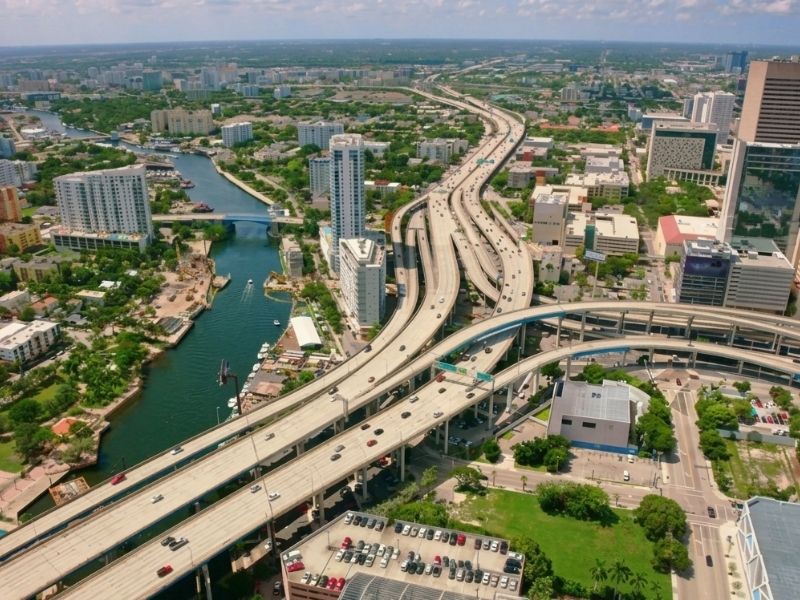
When looking closely at the Miami industrial real estate market, it becomes clear that different neighbourhoods follow completely different trends. If you read a general Miami industrial market report, you will see broad county numbers showing a healthy and stabilising market. The county-wide vacancy rates hover between 6.8% and 8.0%. For many logistics operators and investors, this represents a balanced environment with steady activity.
However, to truly understand the value of an industrial property in Miami, you have to look past the countywide averages. Instead, it is important to focus on core, established hubs. The Central Miami submarket stands out as one of the most resilient and highly sought-after logistics pockets in South Florida.
Instead of following the broader trend of rising supply, Central Miami has maintained exceptional demand. Moreover, it operates as a high-performance urban core where existing infrastructure holds immense value. This makes it a primary focus for businesses looking to secure premium positioning.
Central Miami statistics
To see why Central Miami is pulling so much attention in mid-2026, we have to look directly at the real estate metrics. The data reveals a submarket that is performing at a very high level compared to the rest of the region:
- Miami-Dade county vacancy rate: 6.8% – 8.0%
- Central Miami submarket vacancy rate: A tight 3.5%
- Central Miami space under construction: 0 square feet
- County average asking rent: $16.42 – $17.26 per square foot NNN
- County average sale price: $257 per square foot
The most significant statistic for Central Miami is the zero square feet currently under construction. In outer suburban areas, developers have been actively building new, large-scale industrial parks. In Central Miami, the land is entirely built out.
Because there is no raw land left to develop, the Miami industrial vacancy rates in this specific pocket remain compressed at 3.5%. This creates an environment where every single square foot of existing space is highly utilized, providing long-term stability for property owners and steady demand from long-term tenants.
See more of Miami’s submarket data.
Why Central Miami remains a core focus
Because Central Miami cannot expand outward or build brand-new inventory from scratch, the submarket’s value is driven entirely by the high utility of its existing buildings. Its exceptional geographic position also plays a key role. This setup is a classic example of premium urban infill logistics.
In newer industrial markets, companies often look for massive warehouses with 36-foot clear heights to stack inventory vertically. However, in an established urban core like Central Miami, properties are typically second-generation buildings. While they might not always have the vertical scale of a newly built suburban park, they compete on features that are much harder to replicate. These features include high door counts, flexible layouts, and immediate highway access.
A great example of this operational profile is the LINK Sunshine State facility located at 1300–1350 NW 74th Street. At 100,453 square feet, this property stays highly competitive because its physical layout focuses heavily on daily cargo volume. It features 16 dock-high positions, two external docks, and concrete drive-in ramps.
More importantly, it includes a fully fenced secured yard for outdoor storage—a specific feature that is incredibly difficult to find near the centre of the city. For a business handling local distribution, having physical yard space is often far more valuable than extra ceiling height.
Current industrial lease rates in Central Miami
The strong supply-and-demand dynamics in Central Miami have kept the leasing market highly competitive. If you are actively searching for an industrial space for lease in Miami or trying to find a functional warehouse for lease in Miami, you will find that landlords in this submarket hold strong positions.
Premium pricing for infill locations
While broad county data shows that average warehouse lease rates in Miami have leveled out slightly to around $16.42 to $17.26 per square foot NNN, well-located urban infill spaces regularly command a premium. Landlords in Central Miami rarely need to offer major tenant incentives or rent concessions because empty space is rare.
Why tenants pay the premium
For logistics companies, manufacturers, and last-mile distributors, paying a higher base rent in Central Miami makes clear financial sense. The closer a warehouse is to the urban core, the lower the transportation costs.
By leasing space centrally, businesses save significantly on fuel, driver hours, and fleet wear and tear. The efficiency gained by being close to the customer base easily offsets the premium paid on the lease rate.
Property sales data and investment trends
The investment environment for a Central Miami industrial property is defined by long-term asset retention. Institutional investors and private owners understand that these properties are essentially irreplaceable. As a result, they tend to hold onto them for long periods.
Rising asset values
Across Miami-Dade County, industrial sales data from early to mid-2026 shows that average property prices have reached new record highs. The average is around $257 per square foot. In core infill locations like Central Miami, pricing per square foot often trends even higher. This is due to the sheer scarcity of available inventory.
What happens when a property hits the market?
When a high-utility warehouse for sale in Miami does become available in Central Miami, it attracts immediate interest from both institutional buyers and owner-occupiers. Buyers are willing to move quickly because they recognise that buying an established building in this corridor is the only way to secure a permanent footprint in the centre of Miami.
The investment isn’t just about the physical concrete and steel. It’s about owning a piece of land that sits directly inside a fully built-out, high-demand logistics loop.
You might be interested in: Miami industrial real estate market trends 2026
The strategic power of transit geometry
Beyond the physical parameters of the buildings, the real strength of Central Miami comes down to what transit analysts call logistics geometry. The submarket is woven directly into South Florida’s major highway systems. This allows freight to move with minimal delay.
For instance, a warehouse positioned right off the Interstate 95 corridor at the NW 79th Street exit gives logistics fleets a massive operational advantage. Instead of wasting time driving through local neighbourhood roads, navigating tight residential streets, or idling at endless surface streetlights, delivery trucks can pull out of a loading dock and immediately enter the highway system.
This direct access cuts down on transit friction and makes delivery windows highly predictable. From a central point like NW 74th Street, delivery fleets are positioned just minutes from the Miami International Airport cargo gates and PortMiami. In an industry where a delay of thirty minutes can disrupt an entire supply chain, this level of highway connectivity is an invaluable asset.
See our Miami market reports and stay ahead of each trend.
Frequently Asked Questions (FAQs)
What is driving the low vacancy rate in Central Miami compared to the rest of the county?
The vacancy rate in Central Miami is exceptionally low at 3.5% because the area is completely mature and land-constrained. Unlike suburban submarkets where developers can still find open land to build new industrial spaces, Central Miami has zero square feet under construction. The supply is fixed. Meanwhile, demand from last-mile distributors continues to rise.
What features should I prioritize when looking for an industrial property for sale in Miami?
If you are looking in the urban core, prioritize functional layout specifications over modern building aesthetics. Look closely at the loading door ratios, concrete drive-in ramps, and the availability of secured outdoor yard space. Properties that combine these heavy-utility features with immediate highway access offer the best long-term operational value.
Are warehouse lease rates in Miami higher in Central Miami than in outer submarkets?
Yes, central infill properties generally command a premium over outer suburban warehouses. While the broader county average ranges between $16.42 and $17.26 per square foot NNN, Central Miami’s tight 3.5% vacancy means landlords can maintain firm pricing. Tenants willingly pay this premium because the central location significantly reduces their daily transportation and fleet delivery costs.
Can a business find a newly constructed warehouse for lease miami within the central submarket?
Currently, no. There is no new industrial construction underway in Central Miami. Any business looking for space in this corridor will be looking at established, second-generation properties. However, these buildings are highly valued because their physical footprints and yard space are designed specifically for heavy daily distribution.
Partner with Agora for your South Florida industrial strategy
Navigating a market as tight as Central Miami requires local expertise and real-time data. When vacancy sits at 3.5% and space cannot be built from scratch, success comes down to knowing about opportunities before they hit the open market.
At Agora, we track these inner-city submarkets daily to help you find the right physical layouts and transit connections for your business goals—whether you are looking to lease, buy, or optimize your current portfolio.
Connect with our team today to get localized insights for your next move, or browse our active inventory at agorare.com.