
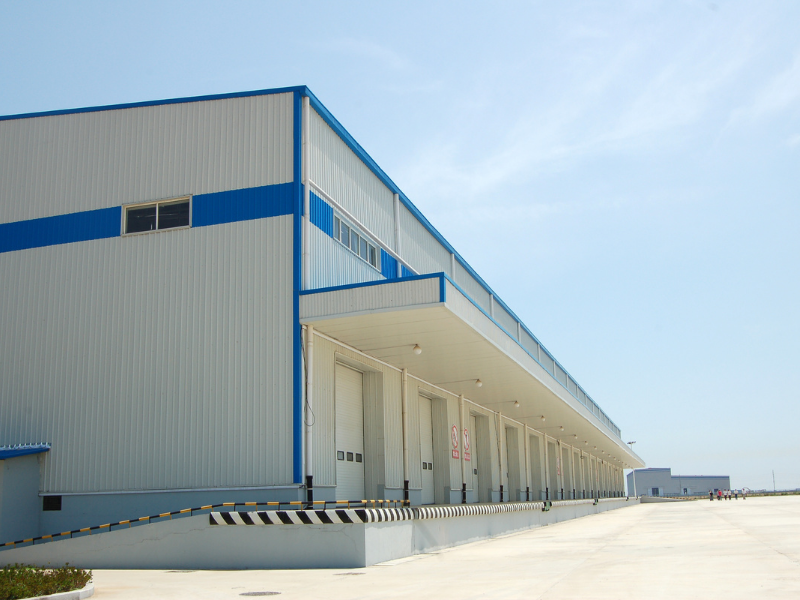
Selling an industrial property in Miami in today’s commercial real estate environment requires a strategic, data-driven approach. As South Florida’s commercial market shifts from rapid post-pandemic rent expansion into a period of healthy stabilization, property owners can no longer rely solely on passive market momentum.
To achieve peak sales pricing, sellers must align their asset positioning with current buyer demand, address facility functionality, conduct thorough lease audits, and leverage precise submarket benchmarks. Whether you own a multi-tenant flex building in Hialeah or a high-cube distribution warehouse in Doral, maximizing your property’s value demands expert execution at every stage of the transaction.
How do you maximize the value of your commercial asset?
To maximize the sale value of an industrial property in Miami, property owners must focus on three core value drivers: optimizing the property’s income stream through mark-to-market lease alignment, enhancing physical facility utility, and targeting the right buyer profile. In our Q3 2026 commercial market analysis, we found that countywide sales benchmarks average $281 per square foot, while tight infill submarkets command premium prices ranging from $274 to $319 per square foot.
If your asset has vacant space or upcoming lease rollovers, you can capture significant premiums by marketing directly to owner-users who are willing to pay higher acquisition prices to avoid renting. Conversely, if your building is fully occupied by long-term corporate tenants, stabilizing cash flows and demonstrating low operating expense pass-throughs will attract institutional investors seeking dependable yields.
What is the current market value of an industrial property in Miami?
Understanding real-time valuation metrics across South Florida is the foundation of a successful sales strategy. In our market research, we observed that countywide direct asking rents across Miami-Dade County hold firm at $21.06 per square foot, with overall industrial vacancy stabilizing at 7.6%. However, pricing varies significantly depending on location, zoning, and building specifications.
Submarket valuation benchmarks from our Q3 2026 data highlight these differences across South Florida:
- West Miami: $319 per square foot average sale price, 1.7% vacancy rate, $28.01 per square foot market rent.
- Miami Airport West: $318 per square foot average sale price, 8.8% vacancy rate, $23.59 per square foot market rent.
- Medley: $290 per square foot average sale price, 9.6% vacancy rate, $19.59 per square foot market rent.
- Miami Airport North: $288 per square foot average sale price, 5.3% vacancy rate, $21.68 per square foot market rent.
- Southwest Dade: $274 per square foot average sale price, 2.7% vacancy rate, $22.59 per square foot market rent across 11.6 million square feet of inventory.
- Hialeah: $229 per square foot average sale price, 5.8% vacancy rate, $16.14 per square foot market rent.
You might be interested in: How Much Is Your Warehouse Worth?
How do you prepare your warehouse before bringing it to market?
Physical preparation directly impacts a prospective buyer’s perception of risk and maintenance costs. Addressing minor deferred maintenance prior to listing prevents buyers from demanding aggressive price credits during the due diligence phase.
1. Upgrade building systems and address deferred maintenance
Commercial buyers pay close attention to structural integrity and major building components during site tours:
- Roof condition and warranty: A roof with 10+ years of remaining underwritten warranty eliminates immediate capital expenditure concerns for prospective buyers.
- Loading dock hardware: Servicing hydraulic dock levelers, replacing worn dock seals, and ensuring smooth operation of street-level roll-up doors creates an excellent first impression.
- Lighting and electrical infrastructure: Upgrading older fluorescent fixtures to energy-efficient LED lighting improves interior visibility and reduces operating costs. High-amperage three-phase power (400 to 2,000+ amps) should be prominently featured in marketing materials.
- Paving and truck court maintenance: Sealcoating asphalt, restriping parking bays, and repairing concrete aprons significantly improves overall curb appeal.
2. Perform a pre-listing lease and expense audit
If your property is tenant-occupied, buyers will thoroughly examine your lease agreements and historical operating expenses.
- Lease roll schedule: Assets with below-market rents and upcoming lease expirations offer buyers immediate upside through mark-to-market rental increases upon contract renewal.
- Expense pass-through documentation: Ensure all real estate property taxes, structural insurance policies, and Common Area Maintenance (CAM) records are audited and fully transparent. In Miami-Dade County, operating pass-through expenses typically range between $4.00 and $7.00 per square foot. Clear accounting instills confidence in buyers and streamlines underwriting.
Should you target owner-users or commercial real estate investors?
Identifying the ideal buyer pool is critical to structuring your marketing campaign and establishing an aggressive asking price.
Selling to owner-occupiers (owner-users)
Owner-users are businesses acquiring real estate for their own operations rather than purely for rental yield.
- Pricing motivation: Owner-users evaluate purchases based on monthly mortgage payments compared to local rental rates. Because they are securing operational control, they are frequently willing to pay a premium above investment yields for quality vacant space.
- Ideal asset types: Single-tenant standalone warehouses, small-bay flex units (1,500 to 10,000 square feet), and properties with secure outdoor storage yards in submarkets like Southwest Dade or Doral.
Selling to private equity and institutional investors
Investors acquire real estate based on cash flow predictability, tenant creditworthiness, and capitalization rates.
- Pricing motivation: Investors focus heavily on net operating income (NOI), tenant credit strength, and lease duration. Properties leased to national logistics operators or regional credit tenants command lower capitalization rates, yielding higher valuation multiples.
- Ideal asset types: Multi-tenant industrial parks, Class A distribution centers, and fully leased flex facilities in established industrial hubs like Medley, Hialeah, or Opa-locka.
How does submarket location impact industrial property pricing across South Florida?
Location remains the most significant determinant of commercial real estate value in Miami-Dade County. Buyers categorize submarkets based on infrastructure connectivity, labor supply, and local tenant demand.
Doral and Airport West
Doral functions as the international air cargo hub of South Florida. Positioned immediately adjacent to Miami International Airport (MIA) and major expressways (SR-826 and SR-836), properties here command premium sales valuations averaging $312 per square foot. Institutional investors favor Doral for its liquidity and high-credit tenant base.
Medley and Hialeah
Medley and Hialeah represent the manufacturing and heavy industrial core of the county. Medley offers heavy industrial zoning (IU-3), rail connectivity, and large truck courts, carrying an average sale valuation of $290 per square foot. Hialeah offers exceptional labor density and an ultra-tight vacancy rate of 5.8%, driving consistent demand for small-bay multi-tenant parks with average sales pricing of $229 per square foot.
West Miami and Southwest Dade
These urban infill submarkets exhibit severe supply constraints. West Miami holds a vacancy rate of 1.7% with sales prices reaching $319 per square foot. Southwest Dade features 11.6 million square feet of total inventory with a low vacancy rate of 2.7% and average sales prices of $274 per square foot. Owners in these corridors benefit from a complete absence of new competing construction.
For detailed analysis of individual submarket metrics, explore Agora Real Estate Group Submarkets Directory.
What key steps ensure a seamless closing process in South Florida?
Once you accept an offer, navigating the due diligence and closing phases requires proactive preparation to avoid transaction delays or price retrading.
- Environmental clearance (Phase I ESA): Commercial buyers and lenders almost universally require a Phase I Environmental Site Assessment. Assembling historic site usage records, environmental permits, and chemical storage documentation beforehand speeds up this review.
- Zoning and certificate of use verification: Confirm that your building’s current use complies with municipal industrial zoning codes (such as IU-1, IU-2, or IU-3 in Miami-Dade County). Resolving unpermitted improvements or open code violations prior to contract execution prevents escrow delays.
- Clean title and survey preparation: Order an updated boundary survey showing property lines, easements, building setbacks, and parking counts to satisfy title commitments early in the process.
Frequently asked questions about selling industrial real estate
What is the average sale price per square foot for an industrial property in Miami?
According to our Q3 2026 market data, the countywide average sale benchmark for an industrial property in Miami stands at $281 per square foot. However, highly sought-after infill submarkets command higher prices, including Southwest Dade ($274 per square foot), Medley ($290 per square foot), and West Miami ($319 per square foot).
Is it better to sell an industrial property vacant or fully leased?
It depends on your target buyer pool. Vacant properties appeal strongly to owner-users who are willing to pay a premium to occupy the building immediately and avoid renting. Fully leased properties with creditworthy tenants and long-term lease structures appeal to private equity and institutional investors seeking stable yield.
How long does it take to sell an industrial property in Miami?
From initial marketing to closing, a commercial industrial transaction in South Florida typically takes 90 to 150 days. This includes 30 to 60 days of active property marketing, followed by a 30 to 45-day due diligence period and a 30-day financing and closing period.
How do property taxes and insurance impact sale valuations?
Operating pass-through expenses—specifically real estate taxes and property insurance—directly affect net operating income. In Miami-Dade County, operating costs average $4.00 to $7.00 per square foot. Buildings with efficient operating expense structures achieve higher net yields, making them more attractive to commercial buyers.
Partner with our team to maximize your commercial asset value
Navigating the sale of an industrial property in Miami requires deep market knowledge, precise valuation modeling, and aggressive marketing execution. At Agora Real Estate Group, we specialize exclusively in South Florida commercial real estate, helping property owners unlock peak value through tailored sales strategies and hyper-local submarket intelligence.
Whether you are looking to sell a standalone warehouse, position a multi-tenant flex park, or execute a tax-deferred exchange, our commercial brokers deliver the market reach and expertise you need.
Ready to determine the current value of your industrial property?
Contact Agora Real Estate Group today to request a confidential commercial valuation and market analysis.